


Environmental Public Health Tracking: Glossary of Terms
Below are definitions of commonly used terms found on the Department of Health Services Environmental Public Health Tracking data pages.
A
Age-Adjusted Rate - Rates are a way to express how often an event (for example, a disease) happens in a group of people. Using rates lets us compare differences, between groups, in how much a disease happens (for example, we can compare rates of a disease in different locations or racial groups). It also allows for comparisons between diseases. For example, is there more cancer or heart disease? Rates put diseases on the same scale. Non-adjusted rates, also known as crude rates, can sometimes be biased by factors such as age. When a rate is statistically modified – or “adjusted” – to eliminate this age bias, it is called an “age-adjusted rate. On our portal and in our profiles, you might see age-adjusted rates per 10,000 or 100,000 people. Say an age-adjusted rate for your county is 450 per 100,000 people. That means for every 100,000 people in your county, you can expect about 450 of them to have that disease.
Age Specific Rate - A rate limited to a particular age group. The numerator is the number of cases or events in that age group; the denominator is the total number of people in that age group in the population of interest.
American Indian or Alaska Native (Race) - A person descended from any of the original peoples of North and South America (including Central America) who also maintains tribal affiliation or community attachment.
Anencephaly – A birth defect that affects the closing of a narrow channel, called the neural tube, which causes the baby to be born without the front part of the brain or a cerebrum (the thinking and coordinating part of the brain).
Asian (Race) - A person descended from any of the original peoples of the Far East, Southeast Asia, or the Indian subcontinent including, for example, Cambodia, China, India, Japan, Korea, Malaysia, Pakistan, the Philippine Islands, Thailand, and Vietnam.
Asthma - A disease that affects a person’s breathing and may restrict the ability to get oxygen to the lungs. For people with asthma, the inside of their airways can become irritated and inflamed and this may result in wheezing and coughing.
At-Risk Group - A group of people with common characteristics that make them more likely to encounter an exposure or develop a specific disease.
Average Daily Rate - The average number of people per day who visited an emergency department or were admitted to a hospital with a specified health issue (for example, asthma episode or heart attack).
B
Basemap - A layer on a map that includes additional geographical information, such as roads, bodies of water, etc. You can turn the basemap on or off on our portal.
Bias - The result of a systematic error in the design of a study which leads to conclusions different from the truth. For example, if birth defect data were collected and one field on the form was always skipped--like the mother's ethnicity--that would result in a systematic error or bias in the dataset.
Birth Count - Number of live births for a specified period of time and specific geographic area.
Birth Rate - Number of live births per 1,000 people, also known as fertility rate.
Birthweight - An infant's weight at or shortly after birth.
Black (Race) - A person having ancestry in any of the Black racial groups from the African continent.
C
Carbon Monoxide (CO) - A colorless, odorless gas that is formed when carbon in fuel is not burned completely. CO is produced by vehicles, generators, and other fuel-burning appliances.
Carcinogen - A carcinogen is a substance that is known to cause cancer.
Carcinogenic Emissions - A carcinogen is a substance that is known to cause cancer. Emissions are compounds released into the air from vehicles or industrial activity. When these emissions can cause cancer, they are called “carcinogenic emissions.”
Census - The count of an entire population. This census usually includes details about individuals’ residence, age, sex, occupation, ethnic group, marital status, etc.
Census Tract - Small statistical subdivisions of a county. Census tracts are relatively permanent but they occasionally are split or merged due to substantial population growth or decline. Data at the census tract level allows us to detect trends within a county that might not be apparent at the county level. For example, in Milwaukee County, two neighboring census tracts may have very different rates of disease, which would be masked in county-level data but apparent in census tract data. Knowing more specifically where disease rates are higher can allow public health professionals to target interventions to the areas where they are most needed.
CDC (Centers for Disease Control and Prevention) - A branch of the U.S. Department of Health and Human Services. CDC is the primary federal agency for conducting and supporting public health activities in the United States. CDC is the funder of the Environmental Public Health Tracking Network.
Chelation Therapy - A treatment that can be used to remove heavy metals (for example, lead) from the body.
Childbearing Age - Women aged 15-44 years, also known as reproductive age.
Community Water System - A public water system which serves at least 15 service connections used by year-round residents or regularly serves at least 25 year-round residents.
Compound - A word used to label a mixture of chemicals in the environment. On the Tracking portal, compounds are identified by name, for example, formaldehyde.
Concentration - The amount of something that is mixed with something else. The amount of ozone in the atmosphere is an example of a concentration.
Confidence Interval - A range of values for a variable of interest (for example, a rate) constructed such that this range has a specified probability of including the true value of the variable. The specified probability is called the confidence level, and the end points of the confidence interval are called the confidence limits. For example, the estimated value of the rate of melanoma in Marathon County from 2001-2005 might be 12.6 cases per 100,000 people. If the 95% confidence interval for this estimate is 10.02 to 15.63 we know that there is less than a 5% chance, statistically, that the true value – that is, the true rate of melanoma for Marathon County – falls outside of this range. Moreover, we know that the best guess within that range, based on the data, is 12.6 cases per 100,000 people.
Contaminant - Any physical, chemical, biological, or radiological substance that has a harmful effect on human health because of its presence in the environment.
Contaminant Level - A measure of how much of a contaminant is present in the environment.
County Population - Census estimate of the number of people living in a particular county.
Crude Rate - The number of cases – or events – divided by the total number of individuals in the population of interest. Rates are typically expressed as a number per unit of population (for example, "per 10,000" or "per 100,000").
D
Demographic Group - A group of people defined by the characteristics they share. Common demographic groups include: age, sex, and race/ethnicity. Others groups may be classified based on medical, behavioral, and environmental risk factors (for example: diabetics, smokers, or farm workers).
E
Emergency Department Visits - Counts of people that have been admitted to emergency departments (also known as an emergency room).
Environment - Broadly defined, the environment includes all that is external to an individual—the air we breathe, the water we drink and use, the land and built structures that surround us—all of the natural and human-formed conditions that influence the quality of our lives.
Environmental Public Health Tracking - Environmental public health tracking is the ongoing collection, integration, analysis, and interpretation of data about environmental hazards, exposure to environmental hazards, and health effects potentially related to exposure to environmental hazards. For example, air pollution is an environmental hazard. If someone is exposed to pollution (breathes it in) over a period of time, that may lead to asthma, which is a health effect.
Epidemiology - The study of the distribution and determinants of health problems. In other words, it is the study of the spread or pattern of sickness in a group of people.
Ethnicity - Belonging to a social group that has a common national or cultural tradition (for example, Hispanic). On our portal, users can view some data topics by ethnicity.
Exposure - Contact with a substance by breathing it, eating or drinking it, or having it absorb through the skin. Acute exposures last a short period of time. Chronic exposures last a long period of time.
F
Fertility - The ability to conceive, to become pregnant, and to give birth to a live child.
Fertility Rate - Number of births per 1,000 women of childbearing age (women aged 15-44 years), also known as birth rate.
Fetal Death (Stillbirth) - A fetus that is not alive after leaving the body of its mother. By Wis. Admin. Code DHS 135.02 (8), a stillbirth of at least 20 weeks of gestation or 350 grams must be reported to Wisconsin Vital Records.
G
Gastroschisis - A birth defect where a portion of an infant's intestines come out of the body through a hole next to the umbilical cord.
Geocode - The process of identifying the coordinates (longitude and latitude) of a location. This process is used so data and information can be shown on maps.
Gestation - The period between conception and birth, usually about 280 days in humans.
Groundwater - Water found beneath the earth's surface that fills pores between materials, such as sand, soil, or gravel.
H
Hazard - A generic term for any situation or state of events that poses a threat to human health.
Health - A state of complete physical, mental, and social well-being and not merely the absence of disease.
Health Effect - The result, positive or negative, of an exposure on a person's physical or mental abilities. For example, lung cancer is a health effect that can be caused by smoking.
Heart Attack - A heart attack is a brief and severe health event in which the heart doesn't get enough oxygen. This decrease in oxygen is caused by blocked blood flow to the heart muscle. A heart attack is also called a myocardial infarction (MI).
High-Risk Group - A group of people who are more likely than other groups to experience a specific exposure or develop a certain disease.
Hispanic (Ethnicity) - A person of Cuban, Mexican, Puerto Rican, South or Central American, or other Spanish culture or origin, regardless of race. Also known as Latino/Latina/Latinx.
Hospitalizations - Counts of people who have been admitted to hospitals.
Hypoplastic Left Heart Syndrome - An underdeveloped left side of the heart that is present at birth. The underdevelopment causes a decrease in blood flow through the body.
Hypospadias - A condition that is present at birth (that is, congenital) in which the opening of the urethra is located below its normal location. This condition is caused by incomplete development of the urethra between 8 and 20 weeks of gestation.
I
Incidence - The number of new cases (that is, incidences) of a disease that develop in a defined population over a period of time.
Incidence Rate - The numerator is the number of new cases of a given disease occurring during the time period. The denominator is the defined population at risk for the disease. Rates are typically expressed as a number per unit of population ("per 10,000" or "per 100,000"). For example, the incidence rate for Lyme disease in Wood County is the number of confirmed Lyme disease cases in a given year, divided by the total number of people in Wood County, and multiplied by 100,000.
Indicator - Numbers or data that are used to describe and/or summarize a broader issue. For example, temperature is used as one indicator of weather.
Infant - A child from birth to one year old.
Infant Mortality Rate - Number of infant deaths per 1,000 live births during the year.
Infertility - The failure to conceive after one year of regular sexual intercourse without the use of contraception.
L
Late Fetal Death - A fetus that is not alive at birth but has gestated at least 28 weeks.
Lead - A naturally occurring metal found in small amounts in the earth's crust. Lead can be found in all parts of our environment. Lead can also come from human activities including burning fossil fuels, mining, and manufacturing.
Lead Poisoning - For children, lead poisoning is defined as a blood lead level of at least 3.5 micrograms/deciliter (µg/dL). For adults, it is defined as a blood lead level of at least 5 µg/dL. There is no safe amount of lead in a person's blood.
Legend - The reference area on a map that lists and explains the colors, symbols, line patterns, shadings, and annotation used on the map.
Live Birth - A fetus that is alive after leaving the body of its mother.
Low Birthweight - A birth weight of less than 2,500 grams (5 lbs 8 oz).
M
Medicaid - The Wisconsin Medicaid program is a state/federal assistance program, administered by the Wisconsin Department of Health Services, that provides medical insurance to eligible individuals.
Morbidity - Illness or sickness.
Myocardial Infarction - See heart attack.
N
Neonatal - The neonatal period starts at birth and ends at 28 full days after birth.
Nitrogen Oxides (NOx) - The generic term for a group of highly reactive gases, all of which contain nitrogen and oxygen in varying amounts. Many nitrogen oxides cannot be seen. However, one common nitrogen oxide, nitrogen dioxide (NO2), can mix with other particles in the air and appear reddish-brown. Some nitrogen oxides smell sweet or harsh.
Numerator - The top number in a fraction or ratio.
O
Ozone (O3) - A gas composed of three oxygen atoms. It is created by a chemical reaction between nitrogen oxides (NOx) and volatile organic compounds (VOCs) in the presence of sunlight. Ozone can be "bad" or "good" depending on its location in the atmosphere:
- "Bad" ozone occurs in the earth's lower atmosphere and is the primary part of smog. Sunlight and hot weather can cause harmful concentrations of ozone in the air. Ozone levels are therefore higher in the summer.
- "Good" ozone occurs naturally in the stratosphere (the highest layer of the atmosphere), approximately 10 to 30 miles above the earth's surface, and forms a layer that protects life on earth from the sun's harmful rays.
P
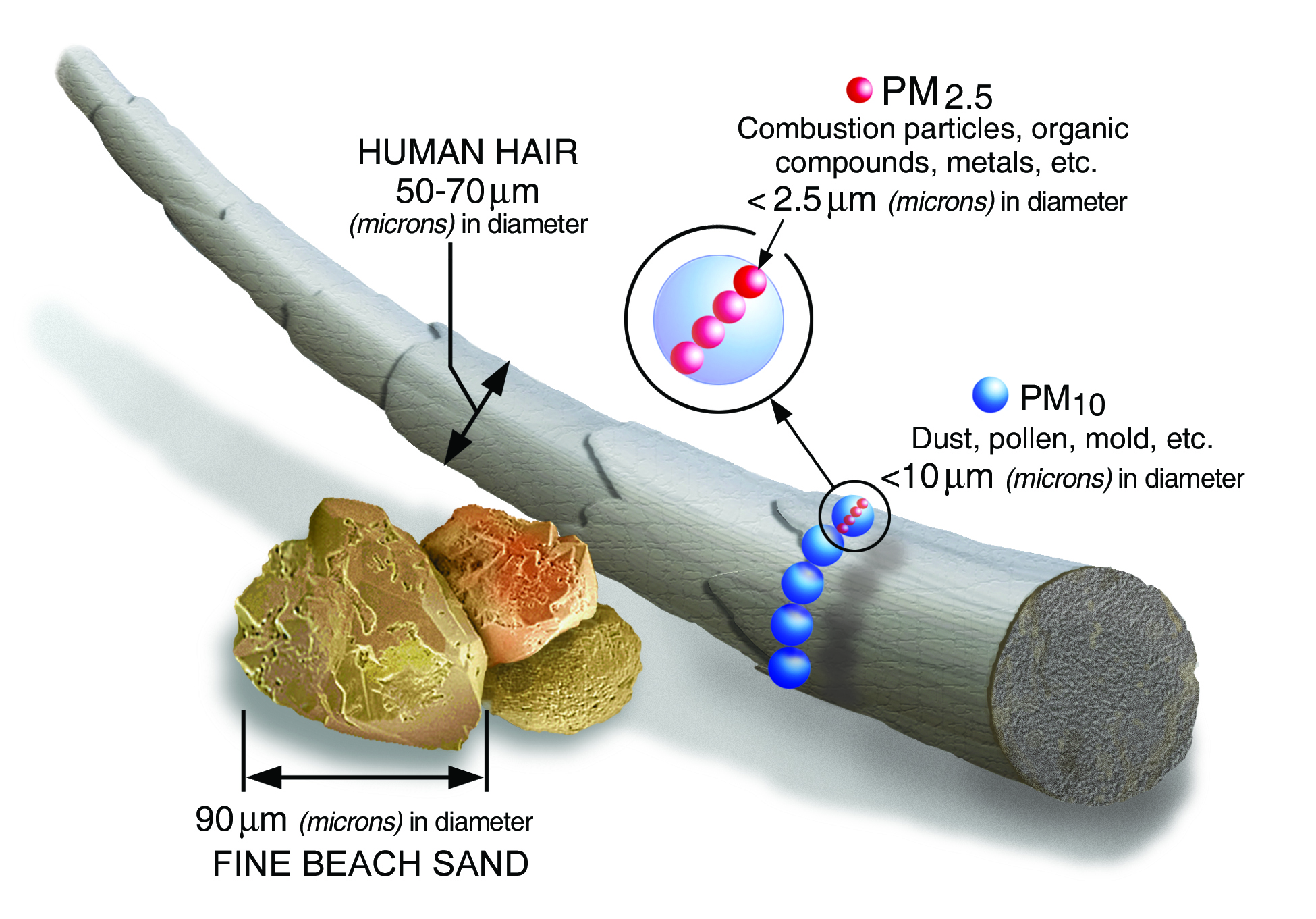
Particulate Matter (PM) - A mixture of extremely small particles and liquid droplets in the air. Also called “particle pollution.” The size of particles is directly linked to their potential for causing health problems. For example, particles that are 10 micrometers in diameter or smaller (PM10) generally pass through the throat and nose and enter the lungs. Once inhaled, these particles can affect the heart and lungs and cause serious health effects.
Percent Low Birthweight - The percentage of all live births weighing less than 2500 grams.
Percent Poisoned (Lead) - The percentage of children under six years old poisoned by lead (that is, with a blood lead level over 3.5 µg/dL) in a given area and period of time. Note: prior to 2022, this percentage included only children with a BLL greater than or equal to 5.0 ug/dL
Percent Premature - The percentage of all live births born before 37 weeks gestation.
Percent of Live Term Singleton Births with Low Birthweight - The percentage of all live births weighing less than 2500 grams that were born individually (that is, not twins, triplets, etc.).
Percent of Live Singleton Births Born Premature - The percentage of all live births born before 37 weeks gestation that were born individually (that is, not as twins, triplets, etc.).
Percentile - A way to group data points on a similar scale. Percentiles give information about where data points sit compared to others. For example if a data point is at the 95th percentile we know that 95% of all data points are below it and that the remaining 5% are above it.
Perinatal Period – The perinatal period starts when the fetus has completed 28 weeks of gestation and ends seven full days after birth.
Person-Day – Person-days are measures used with air quality data. They are calculated by taking the number of days per year above an air quality standard times the population. The measure is a method of communicating the burden of air pollution in a population. If two counties have the same number of air quality exceedance days but different populations, the county with the larger population will have a higher number of person-days. This measure is used to demonstrate the number of people affected by poor air quality days.
Pollutant - A substance introduced into the environment that negatively affects human health.
Post-Neonatal - The post-neonatal period begins at 8 days after birth and ends 364 full days after birth.
Polycyclic Aromatic Hydrocarbons (PAHs) - A group of chemicals created after the burning coal, oil, gas or garbage when the burning is not complete.
Population - The total number of people in a certain geographic area or in a specific group.
Population Served (Water) - A drinking water quality measure that estimates the total number of people who get water from a public water supply within a particular area (for example, a county).
Premature - A baby is considered to be premature if it is born before completing 37 weeks of gestation.
Preterm Birth - A birth that happens before 37 full weeks of gestation.
Prevalence/Prevalence Rate - The percentage of cases of an illness in a population at a given time.
Prevention - Stopping health problems before they occur. For example, one can prevent lung cancer by quitting smoking or mitigating radon in the home.
Probability - The chance that a given event will occur, expressed as a percentage.
Public Water Use - The percentage of a given population (for example, of a county) served by public water systems using Census 2000 data. Note that some water systems (for example, those in Milwaukee County) serve populations of neighboring counties. Public water use is therefore a very rough estimate.
Public Water System - A system that provides piped water for human consumption to at least 15 service connections or regularly serves at least 25 individuals in the past 60 days.
Q
Quantiles - The division of data points into intervals or categories. Percentiles (see definition above) are a specific form of quantile where the division of points is equal to 100. Any range of divisions can be used. For example, if there are five equal categories then you have “quintiles” (see definition below).
Quintiles - Dividing a given set of data points into five equal categories. When quintiles are used, 20% of the data points fall into each category.
R
Race - Groupings of people based on shared ancestry and anthropological concepts. Race groupings are not biological designations but were instead developed for the collection of standardized data. These groupings are used by state and federal agencies for record keeping, collection, and presentation of data including data from federal surveys, census data, and data necessary to meet legal requirements (for example, the implementation of civil rights laws).
Rate - An expression of the frequency with which an event (for example, the onset of a disease) occurs in a defined population.
Ratio - The relationship, as a quantity, of one part to the whole. Ratios are typically expressed as fractions with the numerator (that is, top number) representing the “part” and the denominator (that is, the bottom number) representing the “whole.” One example of ratio is the birth ratio.
Random Sample - A specific kind of sample taken from a larger population where everyone in the population has an equal chance of being selected. Random samples have statistical properties that allow them to make better estimates of the whole population than samples selected in other ways.
Reactive Organic Gas - Also referred to as Volatile Organic Compounds (VOCs), these gases are precursors to the formation of ozone (O3) (see definition above). High levels of ozone can be related to negative health effects in humans.
Relative Standard Error (RSE) of a Rate – The estimated standard deviation of a rate based on its numerator and denominator together. RSE is commonly calculated to determine the confidence interval (see definition above) of a rate. It can also be used as a measure of statistical stability where events are rare. Higher standard errors suggest less stable estimates.
Reproductive Age - Traditionally defined as 15 to 44 years of age, also known as childbearing age.
Reproductive Health - Refers to the conditions that affect the functioning of the male and female reproductive systems during all stages of life.
Reproductive Outcomes - Disorders that occur as a result of poor reproductive health. Some reproductive outcomes include reduced fertility/infertility, impotence, menstrual disorders, birth defects, fetal growth restriction, low birth weight, preterm birth, and developmental disorders.
Risk - The likelihood or possibility of an outcome such as injury, disease, or death. For example, a risk level of 1 in 1,000,000 indicates that one person out of one million people will experience the outcome.
S
Sex Ratio – The ratio of males to females at birth. Calculated as number of male births divided by number of female births, and multiplied by 1,000.
Singleton Birth – Pregnancy resulting in the birth of one child (i.e., not twins, triplets, or other multiples).
Spina Bifida - A condition that affects the spine and is usually visible at birth. It is a type of neural tube defect. The backbone that protects the spinal cord does not form and close as it should, which can result in damage to the spinal cord and nerves.
Sulfur Dioxide (SO2) - One compound of the family of sulfur oxide gases (SOx). These gases are formed when fuel containing sulfur – such as coal and oil – is burned, when gasoline is extracted from oil, and/or when metals are extracted from ore. SO2 dissolves in water vapor to form acid. In this form it interacts with other gases and particles in the air to form sulfates and other products that can be detrimental to human health.
Suppression, or Suppressed Data - These data cannot be shown in tables, maps, and figures. There are a few possible reasons for suppression. Suppression is applied when the population of the selected county or census tract is too small for Tracking to calculate a rate reliably. In addition, when Tracking provides information on rare diseases, data are suppressed to protect the confidentiality of individuals in the selected county or census tract. Finally, sometimes the data steward who collected the data provides suppression guidelines Tracking must follow. When county or census tract data are suppressed in Wisconsin Tracking’s portal, try using the CDC's Data Explorer and selecting the "data smoothed" option (if available) in your query. Data smoothing provides a broader regional selection with sufficient population to calculate a rate.
Surface Water - Bodies of water that form and remain above ground, such as lakes, ponds, rivers, streams, bays, and oceans.
Surveillance - A dynamic process in which data on health and disease in a population are collected, analyzed, and reported.
T
Term Birth - Birth at or later than 37 full weeks of gestation.
Tetralogy of Fallot - A problem with the heart’s structure that is present at birth. This defect changes the normal flow of blood through the heart.
Total Birth Count - The total number of live births to Wisconsin residents within a particular time interval and/or geographic area.
Total Children Tested for Lead Poisoning - Number of children who had a capillary or venous blood lead test. Only one test per child per year is used. Results from the first test that is greater than or equal to 3.5 mcg/dL is used if there is at least one test greater than or equal to 3.5 mcg/dL during the year. Otherwise, the first test during the year is used. If a capillary test was followed by a venous test within three months, the venous test is used. Note: prior to 2022, only children's test results above 5.0 ug/dL were included in the data.
Total Children Poisoned by Lead - The number of children under six years old who were poisoned by lead (that is, have a blood lead level over 3.5 mcg/dL). Note: prior to 2022, lead poisoning was defined as a child with a BLL greater than or equal to 5.0 ug/dL.
Total Fertility Rate - The average number of children a woman is predicted to give birth to during her lifetime, given the age-specific birth rates observed in a given year. The value is given per 1,000 women. For example, the total fertility rate in Wisconsin in 2009 was 1,877 children per 1,000 women. This means that in 2009, the expected number of children each Wisconsin woman would give birth to in her life time was just under 2 (that is, 1.87).
Transportation of the Great Arteries - A heart condition that is present at birth and is often called a congenital heart defect. It occurs when the two main arteries going out of the heart, the pulmonary artery and the aorta, are switched in position, or transposed.
V
Very Low Birth Weight - A birthweight of less than 1,500 grams (3 lbs, 4 oz).
W
Well Monitoring - Measuring well water quality using on-site instruments or laboratory methods.
White (Race) - A person having origins in any of the original peoples of Europe, the Middle East, or North Africa.
Women, Infants, and Children (WIC) Program - A program to promote and maintain the health and well-being of nutritionally at-risk pregnant, breastfeeding, and postpartum women, infants, and children. WIC provides supplemental nutritious foods, nutrition, and breastfeeding information, and referral to other health and nutrition services.
Z
ZIP (Zone Improvement Plan) Codes - A 5-digit code that identifies a specific geographic area for mail delivery. ZIP codes can represent an area within a state, an area that crosses state boundaries (which is rare), or a single building or company that has very high mail volume.
References
The following resources were referenced in the creation of this glossary:
- CDC (Centers for Disease Control and Prevention) Reproductive Health: Glossary
- National Institute of Environmental Health Sciences (NIEHS)
- US Environmental Protection Agency (EPA): Terms of Environment: Glossary, Abbreviations, and Acronyms
- US Environmental Protection Agency (EPA): Region 5 Superfund Glossary